6/20 – Kim’s Surgery Update

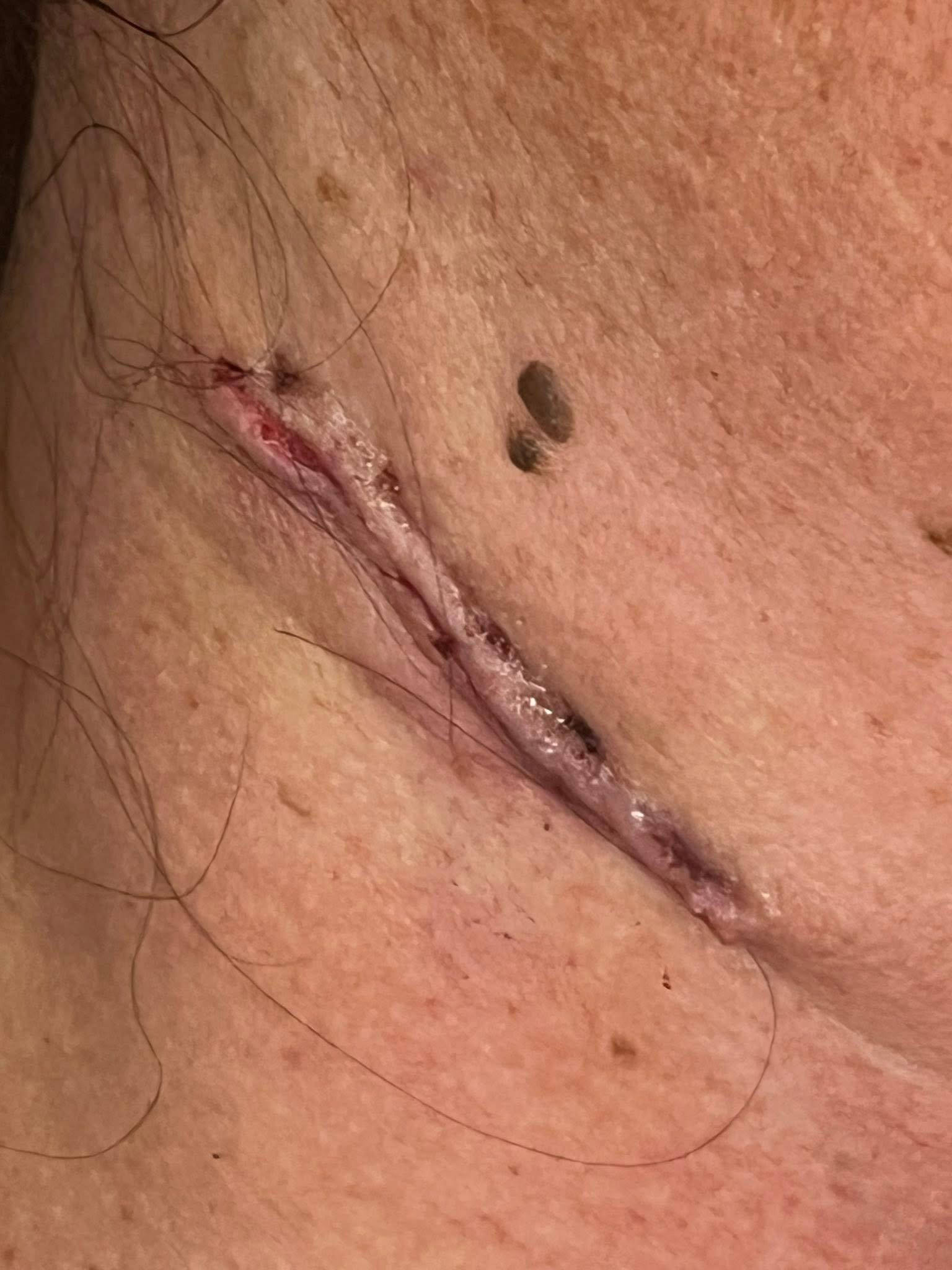
Kim underwent her first major surgery in Hawaii on Friday. The surgical team focused exclusively on restoring proper function to her right internal jugular vein (IJV). Here’s what the procedure involved:
- Resection of the first cervical vertebra (C1): This bone, along with an elongated styloid process and associated ligament (a condition known as Eagle’s Syndrome), was compressing the vein, preventing blood from draining properly from Kim’s brain.
- Removal of scar tissue: The vein was also constricted by unusual scar tissue, further reducing blood flow. More details about this scar tissue are shared below.
Following the surgery, initial assessments suggested improved blood flow through the vein. However, subsequent imaging revealed that the vein remains partially collapsed at the C1 level. As a result, Kim may require a second surgery this coming week to place a stent and fully open the vein.
Understandably, this news is deeply disappointing and emotionally draining for Kim. Physically, she is in significant pain, experiencing widespread swelling, and suffering from mast cell reactions triggered by the anesthesia and the surgery itself. This is why she may appear red and inflamed in recent photos. These Mast Cell Activation responses cause a cascade of symptoms affecting her entire body and brain.
Please continue to keep Kim in your thoughts and prayers.
🧠 Educational Note:
Jason recently asked a thoughtful question about why Kim’s body forms excessive scar tissue. The surgeons shared some insight, which they are now seeing in a growing number of their patients. They believe three key factors are contributing to this phenomenon:
- Infections: Biopsies of lymph nodes and tissues from surgical patients often reveal infections like Lyme disease, Strep bacteria, Mononucleosis, and other viruses. There’s been a noticeable rise in cases among those with post-viral C#vid complications.
- Genetics: Conditions like Hypermobile Ehlers-Danlos Syndrome (hEDS) and other connective tissue disorders result in poor structural integrity of blood vessels and collagen. These individuals experience abnormal joint mobility and are prone to excessive scarring and tissue damage throughout the body.
- Histamine Overload: The net result of these issues is a chronic increase in histamine production throughout the brain and body. While histamine typically mediates allergic responses, in this patient population, it becomes dysregulated—contributing to Mast Cell Activation Syndrome (MCAS). Elevated histamine weakens vessel walls and impairs collagen-based support structures
Comments
Post a Comment